


Getting a divorce is never simple. Between emotional stress, legal paperwork, and family responsibilities, the last thing you want is to worry about whether you’ve chosen the right law firm. People often ask how to choose a family law firm that’s both trustworthy and experienced, especially for divorce cases. The wrong choice can cost you time, money, and peace of mind. Here’s what you need to know if you’re aiming for the best possible divorce legal representation.
If you want to choose a family law firm for a divorce case, look for firms with proven family law expertise, check their reputation, compare client reviews, and ensure they offer personalized family law consultation. Prioritize lawyers experienced in your specific type of divorce, ask about their support process, and confirm transparent fees before hiring a divorce lawyer.
Understanding Family Law Firms for Divorce Cases
Not every lawyer who handles divorce is equally skilled. Family law is a specific area that covers divorce, child custody, maintenance, property division, and related matters. The right firm will have a deep bench of family court lawyers who know the local courts, current laws, and practical strategies for your type of case.

Why Family Law Expertise Matters
- Specialized knowledge: Divorce law changes often. Only lawyers focused on family law keep up with the latest amendments to the Hindu Marriage Act, Special Marriage Act, Guardians and Wards Act, and more.
- Experience with judges: Seasoned family law firms know how local judges interpret the law, which affects your case’s outcome.
- Handling complexity: Property disputes, child custody battles, and maintenance claims require sharp legal skills and negotiation experience.
What Services Should a Family Law Firm Offer?
A good firm will provide:
– Initial family law consultation to evaluate your case
– Legal services for divorce, including drafting petitions, replies, and affidavits
– Representation in family court hearings
– Mediation or settlement negotiation
– Post-divorce support (appeals, enforcement, modifications)
Types of Divorce Cases Handled
- Mutual consent divorce (fastest, if both parties agree)
- Contested divorce (one party opposes or disputes terms)
- NRI or cross-border divorces
- High-net-worth divorces with complex assets
- Child custody and guardianship matters
Key Factors for Divorce Attorney Selection
Choosing a family law firm is more than just picking a name from a list. You want someone who will support you from start to finish, understands your goals, and can handle surprises.
Reputation and Track Record
- Look for client testimonials and Google reviews. Don’t just trust the firm’s website.
- Check if they’ve handled cases similar to yours. For example, if you’re an NRI, ask if they’ve managed cross-border divorces.
- Ask about their success rate. No one can guarantee results, but experienced firms have more positive outcomes.
Credentials and Recognition
- Are the lawyers recognized by Bar Councils or listed in reputable legal directories?
- Do they participate in family law seminars, write articles, or teach?
- Any awards for legal excellence?
Local Experience
- Family court procedures vary by city and state. A Delhi-based firm may not be ideal for a Chennai case.
- Local lawyers know the court staff, judges, and practical timelines.
Communication and Accessibility
- How quickly do they respond to calls or emails?
- Will you deal with a senior lawyer or only junior associates?
- Do they explain things in plain language?
Law Firm Comparison: How to Evaluate Your Options
Step 1: Shortlist Potential Firms
Start by listing 3 – 5 firms known for family law expertise in your area. Use:
– Bar Council directories
– Online platforms like LawRato, Legal India, or India Kanoon
– Recommendations from trusted friends or professionals
Step 2: Check Background and Reviews
- Search for independent reviews on Google, Justdial, and law forums.
- Look for cases in the news or legal databases involving the firm.
- Be wary of only five-star reviews (may not be genuine).
Step 3: Compare Services and Approach
- Does the firm offer a detailed family law consultation?
- Are they proactive in discussing possible outcomes, not just best-case scenarios?
- Do they have a clear process for updates and client communication?
Step 4: Assess Transparency and Fees
- Get a written fee structure: retainer, per-hearing charges, and extra costs.
- Ask about payment schedules and refund policies if the case settles early.
- Avoid firms that guarantee outcomes or demand full payment upfront.
Step 5: Meet the Lawyer in Person
- The first meeting tells you a lot. Are they listening or just talking?
- Do they outline likely timelines and risks?
- Can you trust them with sensitive details?
What to Ask During a Family Law Consultation
A good consultation is not just a sales pitch. Use it to judge their expertise and fit for your needs. Here are some questions you should ask:
- How many divorce cases have you handled in the past year?
- What is your approach to settlements vs. litigation?
- Who will handle my case day-to-day? (Senior partner or junior?)
- What documents do I need to prepare?
- How do you keep clients updated?
- What are the likely costs and timelines?
- Are there alternative dispute resolution options?
If you feel rushed or pressured, that’s a red flag. A firm that values your time and questions is likely to value your case too.
Legal Services for Divorce: What’s Included?
Most clients don’t know what to expect from a family court lawyer until they’re deep into the process. Here’s a breakdown of typical divorce legal representation:
Initial Assessment
- Review of marriage documents, property records, and communication history
- Explanation of legal grounds for divorce under relevant Acts (e.g., cruelty, adultery, desertion)
- Guidance on next steps and possible outcomes
Filing and Documentation
- Drafting divorce petitions, affidavits, and counter-claims
- Filing with the appropriate family court
- Ensuring compliance with local rules and deadlines
Hearings and Evidence
- Representation at all court hearings
- Cross-examination of witnesses if needed
- Submitting evidence, including financial records, property documents, and communication logs
Negotiation and Settlement
- Attempting mediation or out-of-court settlement if possible
- Drafting settlement agreements covering alimony, child custody, visitation, and property division
Post-Judgment Support
- Assistance with appeals or modifications (if circumstances change)
- Enforcement of court orders (e.g., maintenance, visitation)
Mistakes to Avoid When Hiring a Divorce Lawyer
People sometimes choose a family law firm based only on cost or location. That can backfire. Here are common mistakes:
- Picking a generalist lawyer, not a family law specialist
- Believing unrealistic promises or ‘guaranteed’ results
- Ignoring client reviews or not checking references
- Not clarifying fee structures and hidden charges
- Rushing into decisions without a proper consultation
How Divorce Case Support Works
The best law firms offer ongoing support, not just paperwork. Divorce cases can stretch for months or even years, so you need a lawyer who’s available throughout.

Communication and Updates
- Regular case status updates by email, phone, or WhatsApp
- Clear explanations of legal jargon and court orders
- Reminders for hearings and document submissions
Emotional and Practical Guidance
- Referrals to counselors or support groups if needed
- Advice on interacting with your spouse or co-parent during proceedings
- Help with related legal issues (domestic violence, interim maintenance, child protection)
Handling Surprises
- Strategy adjustments if new evidence or claims arise
- Guidance on urgent matters like child abduction or asset concealment
Comparing Law Firms: Practical Checklist
Here’s a sample checklist you can use for law firm comparison:
- Does the firm specialize in family law?
- Are the lawyers experienced in your type of divorce?
- What is their reputation (independent reviews, word of mouth)?
- Do they offer transparent fee structures?
- How do they communicate with clients?
- Are they familiar with your local family court?
- Can they handle complex issues (NRI matters, property disputes)?
- Do they provide post-divorce legal support?
Tick off at least 6 – 7 points before making your final choice.
Cost of Divorce Legal Representation in India
Fees for hiring a divorce lawyer in India vary widely. Factors include city, lawyer’s experience, and case complexity. Here’s a general idea:
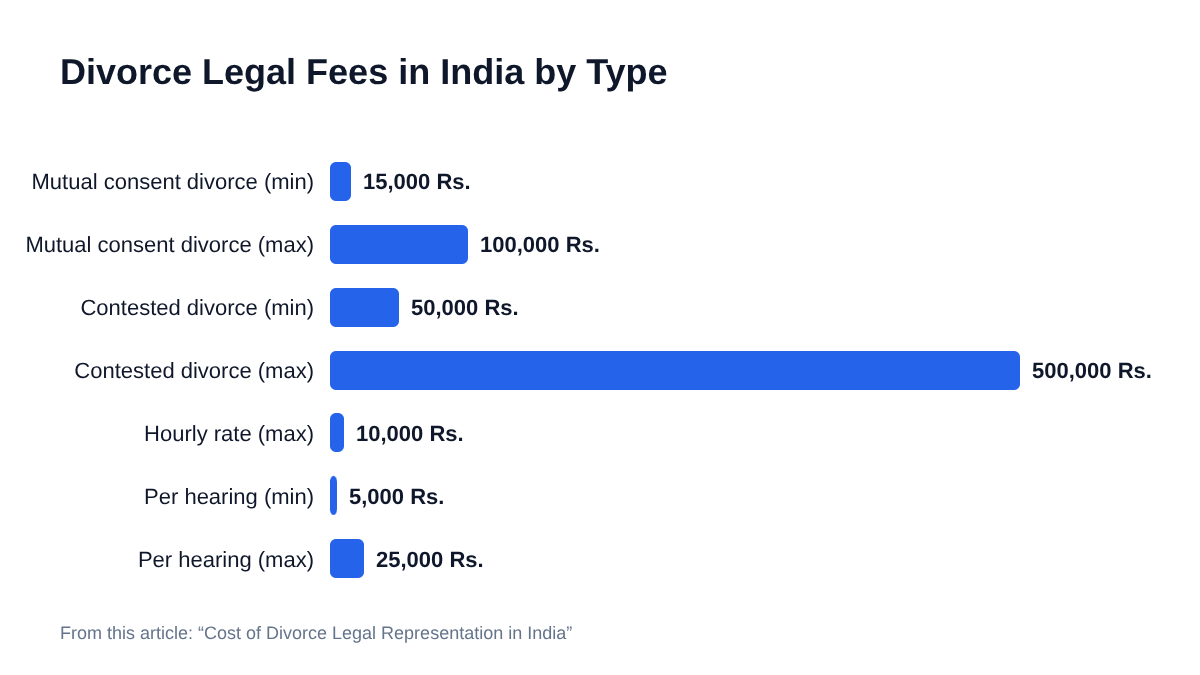
- Mutual consent divorce: Rs. 15,000 to Rs. 1,00,000 (all-inclusive)
- Contested divorce: Rs. 50,000 to Rs. 5,00,000 (may go higher for complex cases)
- Hourly rates: Rs. 2,000 to Rs. 10,000 per hour for senior lawyers
- Per hearing charges: Rs. 5,000 to Rs. 25,000 per hearing
Always confirm if fees include drafting, filing, appearances, and consultation. Some firms also charge separately for mediation or appeals.
Red Flags: When Not to Hire a Law Firm
Sometimes, it’s better to keep looking. Watch out for these warning signs:
- Lawyer promises a quick, guaranteed result
- No written fee agreement or vague charges
- Poor communication or failure to return calls
- No experience in your type of case
- Reluctance to provide references
If you spot any of these, I’d skip that firm.
Legal Framework: Divorce Laws in India
Understanding the basics of Indian divorce law can help you judge a firm’s expertise. Here are the main statutes:
- Hindu Marriage Act, 1955: Applies to Hindus, Buddhists, Jains, Sikhs
- Special Marriage Act, 1954: For interfaith or civil marriages
- Indian Divorce Act, 1869: For Christians
- Parsi Marriage and Divorce Act, 1936: For Parsis
- Muslim Personal Law (Shariat) Application Act, 1937: For Muslims (mostly outside family courts)
Each Act has its own grounds for divorce, requirements for maintenance, and procedures for child custody. Only a firm with real family law expertise will know the details and latest amendments.
Family Court Procedures: What to Expect
Family court is not like regular civil court. There are special rules and timelines:
- Petition is filed, then notice served to the other party
- Court may order mediation before trial
- Evidence is submitted in writing and through witness examination
- Interim orders (maintenance, custody) can be issued pending final judgment
- Most mutual consent divorces take 6 – 12 months; contested cases can stretch to 2 – 5 years
Your lawyer should explain each stage and prepare you for what’s coming.
Role of Mediation and Alternative Dispute Resolution
Many family courts encourage mediation to settle issues out of court. This can save time, money, and stress. Ask your lawyer if they have experience with:
- Court-appointed mediation
- Private mediation with accredited mediators
- Negotiating settlements for property, maintenance, or custody
A good firm will try to resolve disputes amicably if possible, but be ready to fight in court if needed.
Frequently Asked Questions
What factors should I consider to choose a family law firm for my divorce?
Look for family law expertise, proven experience in divorce cases, strong client reviews, transparent fee structures, and a clear communication process. Local experience and the ability to handle your specific type of case are also important.
How do I know if a lawyer is experienced in family law?
Check if the lawyer or firm focuses mainly on family law, has handled similar cases, attends family law seminars, or publishes articles on divorce legal representation. Ask for references from past clients and review their case history.
What questions should I ask during a family law consultation?
Ask about the lawyer’s experience, typical timelines, approach to negotiation and litigation, who will handle your case, fee structure, and how they communicate updates. Also inquire about possible outcomes and risks for your specific situation.
How does the divorce process work in Indian family courts?
The process usually involves filing a petition, serving notice, mediation attempts, submission of evidence, hearings, and final judgment. Mutual consent divorces are faster, while contested cases can take years. Your lawyer should explain each step and expected timelines.
What is the cost of hiring a divorce lawyer in India?
Costs vary by city, lawyer’s experience, and case type. Mutual consent divorce may range from Rs. 15,000 to Rs. 1,00,000, while contested cases can cost Rs. 50,000 to Rs. 5,00,000 or more. Always get a written fee agreement.
What are the risks of hiring the wrong law firm?
You may face delays, higher costs, poor outcomes, or even case dismissal. Inexperienced lawyers may miss deadlines, mishandle evidence, or fail to negotiate settlements, affecting your rights and future.
How can I verify a law firm’s reputation?
Check independent reviews on Google and law forums, ask for references, review their past cases, and check for recognition from Bar Councils or legal directories. Avoid relying only on the firm’s website.
Can I change my divorce lawyer or law firm during the case?
Yes, you can change your lawyer by filing a Vakalatnama with the new lawyer and informing the court. However, changing lawyers frequently may cause delays and extra costs. Choose carefully at the start.
Is mediation mandatory in Indian divorce cases?
Many family courts refer parties to mediation before starting a contested trial. Mediation is not always mandatory, but it is strongly encouraged to try and resolve disputes amicably.
What documents do I need to give my divorce lawyer?
Common documents include marriage certificate, address proof, identity proof, income and property records, evidence of grounds for divorce (messages, photos, complaints), and details of children if custody is involved.
How long does a typical divorce case take in India?
A mutual consent divorce can take 6 – 12 months, while a contested divorce may last 2 – 5 years or longer, depending on complexity and court workload.
What should I do if my spouse hires a powerful law firm?
Focus on hiring a firm with family law expertise, not just brand name. Ensure your lawyer is proactive, communicates well, and prepares thoroughly for court. Share all relevant information honestly to help your case.
Key Takeaways for Choosing the Right Family Law Firm
Choosing the right family law firm is a critical decision with long-term impact. Prioritize expertise in divorce cases, transparent communication, and a track record of success. Take time to compare law firms, ask detailed questions, and trust your instincts before making a final choice.