
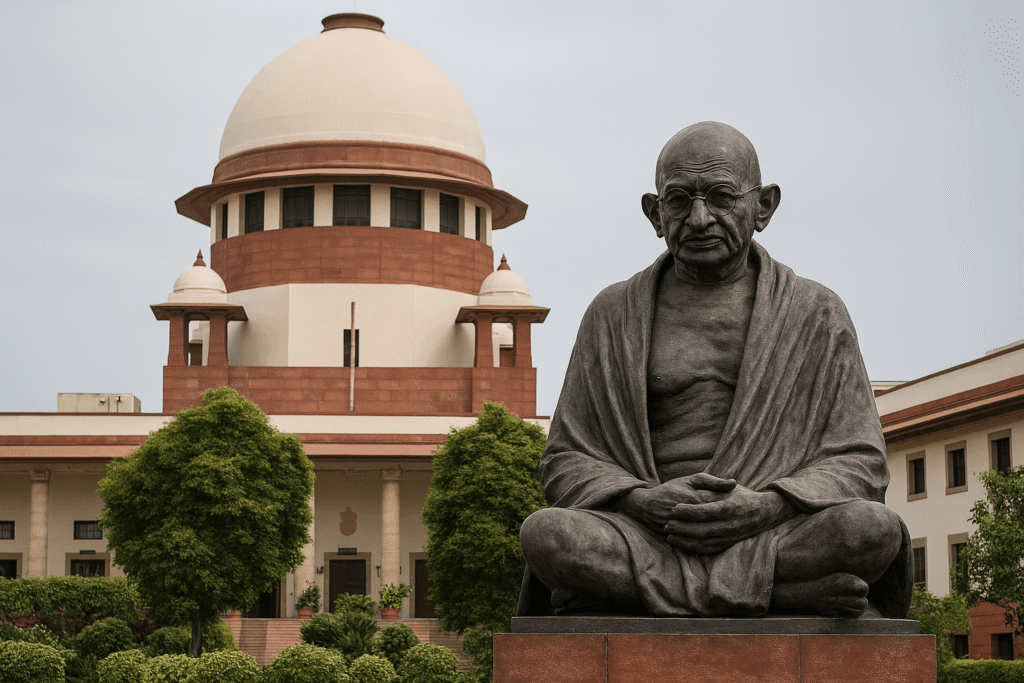

Public Interest Litigation (PIL) represents one of the most transformative developments in the Indian judicial system. Emerging as a judicial innovation to widen access to justice, PIL in India enables courts to address matters affecting the public at large, particularly where fundamental rights of marginalized or disadvantaged groups are at stake. Over time, however, the expansive use of PIL has necessitated judicial safeguards to prevent abuse, prompting the Supreme Court to frame clear guidelines and restrictions.
This article provides a comprehensive, informational overview of Public Interest Litigation India, focusing on its constitutional foundation, procedural framework, Supreme Court guidelines, judicial interpretation, and evolving trends—strictly aligned with Indian legal ethics and non-solicitation norms.
Conceptual Overview of Public Interest Litigation India
Public Interest Litigation refers to litigation initiated not for the enforcement of private rights, but for the protection of public interest. Unlike traditional adversarial litigation, PIL departs from rigid rules of locus standi, allowing any public-spirited individual or organization to approach constitutional courts on behalf of those unable to do so themselves.
Key objectives of PIL in India include:
-
Protection of fundamental rights
-
Enforcement of constitutional and legal obligations
-
Judicial oversight of executive and administrative action
-
Advancement of social justice
The evolution of PIL has been largely judge-driven, reflecting the Indian judiciary’s proactive role in constitutional governance.
Statutory and Constitutional Framework Governing PIL in India
Constitutional Provisions
The constitutional basis of Public Interest Litigation India lies primarily in:
-
Article 32 – Right to constitutional remedies before the Supreme Court
-
Article 226 – Powers of High Courts to issue writs
-
Article 21 – Right to life and personal liberty (liberally interpreted)
-
Article 14 – Right to equality before law
Articles 32 and 226 empower courts to issue writs such as mandamus, certiorari, prohibition, quo warranto, and habeas corpus for enforcement of fundamental and legal rights.
Authoritative Reference:
https://legislative.gov.in/constitution-of-india/
Absence of Codified Legislation
Notably, there is no specific statute governing PIL in India. The doctrine has evolved through judicial pronouncements, making Supreme Court and High Court judgments the primary source of law in this domain.
Rights, Duties, and Legal Obligations in PIL Matters
Rights Protected Through PIL
Public Interest Litigation India has been instrumental in safeguarding:
-
Environmental rights
-
Rights of bonded laborers and migrant workers
-
Prisoners’ rights
-
Gender justice and child rights
-
Access to food, shelter, healthcare, and education
Many of these rights have been read into Article 21 through judicial interpretation.
Duties of PIL Petitioners
Courts have repeatedly emphasized that PIL is a jurisdiction of responsibility, not entitlement. Petitioners must:
-
Act bona fide and in good faith
-
Disclose complete and accurate facts
-
Avoid personal, political, or publicity-driven motives
-
Demonstrate genuine public interest
Failure to meet these standards can invite dismissal with exemplary costs.
Procedural Aspects and Legal Mechanism of PIL in India
Who Can File a PIL?
Under the relaxed locus standi rule, the following may file a PIL:
-
Any public-spirited individual
-
Social action groups or NGOs
-
Legal representatives acting on behalf of affected persons
However, busybodies and proxy litigants are expressly discouraged.
Where Can a PIL Be Filed?
-
Supreme Court of India under Article 32
-
High Courts under Article 226
Choice of forum depends on the nature, territorial scope, and constitutional importance of the issue.
Format and Filing
While PILs are generally filed as writ petitions, courts have, in exceptional cases, treated letters and postcards as writ petitions—a practice known as epistolary jurisdiction. This is now used sparingly.
Supreme Court Rules, 2013 (Order XXXVIII) regulate PIL filing procedures.
Reference: https://main.sci.gov.in/rules
Supreme Court Guidelines on Public Interest Litigation India
To curb misuse, the Supreme Court has issued structured guidelines, particularly in State of Uttaranchal v. Balwant Singh Chaufal (2010).
Key Guidelines Laid Down
Courts must ensure:
-
PIL is filed for genuine public cause
-
Petition involves violation of fundamental or legal rights
-
Petitioner has no personal or oblique interest
-
Issues are not policy matters unless arbitrary or unconstitutional
-
Frivolous PILs are discouraged with costs
Judgments emphasize judicial restraint and institutional discipline.
Case Reference:
https://indiankanoon.org/doc/1201527/
Restrictions and Limitations on PIL in India
The judiciary has categorically excluded certain matters from PIL jurisdiction.
Matters Generally Not Entertained as PIL
-
Service and employment disputes
-
Admission and examination matters
-
Property and landlord-tenant disputes
-
Purely private or commercial conflicts
-
Politically motivated petitions
This position was reaffirmed in Dattaraj Nathuji Thaware v. State of Maharashtra (2005).
Doctrine of Separation of Powers
Courts have clarified that PIL should not become a tool for judicial governance. Policy decisions fall within the executive and legislative domain unless they violate constitutional mandates.
Judicial Interpretation and Landmark PIL Case Laws
Manubhai Shah v. Life Insurance Corporation of India (1981)
Recognized citizens’ right to information as part of free speech.
S.P. Gupta v. Union of India (1981)
Often called the “PIL Charter Case”, it liberalized locus standi and institutionalized PIL in India.
Case reference:
https://indiankanoon.org/doc/1167710/
People’s Union for Democratic Rights v. Union of India (1982)
Expanded Article 21 to include humane working conditions and dignity of labor.
Subhash Kumar v. State of Bihar (1991)
Clarified that PIL cannot be invoked for personal grievances under the guise of public interest.
Practical Implications of PIL in India
For Individuals
-
Enables access to justice for marginalized groups
-
Provides constitutional remedies beyond traditional litigation
For Businesses and Institutions
-
Increased judicial scrutiny on environmental, labor, and regulatory compliance
-
PILs can trigger policy changes affecting entire industries
However, courts balance public interest with economic and administrative realities.
Common Misconceptions About Public Interest Litigation India
| Misconception | Legal Clarification |
|---|---|
| Anyone can file PIL for any issue | Only genuine public causes are maintainable |
| PIL guarantees relief | Courts may dismiss without merits |
| PIL replaces governance | Courts exercise restraint |
| PIL is free from consequences | Costs can be imposed for abuse |
Frequently Asked Questions
What is Public Interest Litigation in India?
Public Interest Litigation India is a constitutional mechanism allowing courts to address violations of rights affecting the public or disadvantaged groups.
Who can file a PIL in India?
Any public-spirited individual or organization acting bona fide can file a PIL.
What are Supreme Court guidelines for PIL?
Guidelines ensure PIL is not misused for private, political, or publicity-oriented purposes and must involve genuine public interest.
Can PIL be filed for personal disputes?
No. Courts consistently reject PILs involving personal or private grievances.
Can courts impose penalties for misuse of PIL?
Yes. Exemplary costs may be imposed to deter frivolous or motivated litigation.
Emerging Trends and Legal Developments in PIL Jurisprudence
Recent judicial trends indicate:
-
Greater scrutiny at the admission stage
-
Emphasis on accountability of petitioners
-
Decline of epistolary PILs
-
Data-driven and compliance focused PILs (environment, urban governance)
Courts are increasingly balancing access to justice with judicial discipline.
Public Interest Litigation India remains a powerful constitutional tool that has reshaped Indian public law and governance. While it has expanded access to justice and strengthened rights protection, judicially evolved guidelines and restrictions ensure that PIL retains its credibility and institutional integrity.
The Supreme Court’s cautious approach underscores that PIL is a means to serve constitutional justice not an avenue for personal, political, or publicity driven litigation. Understanding its scope, procedure, and limitations is essential for appreciating its role in India’s constitutional framework.