
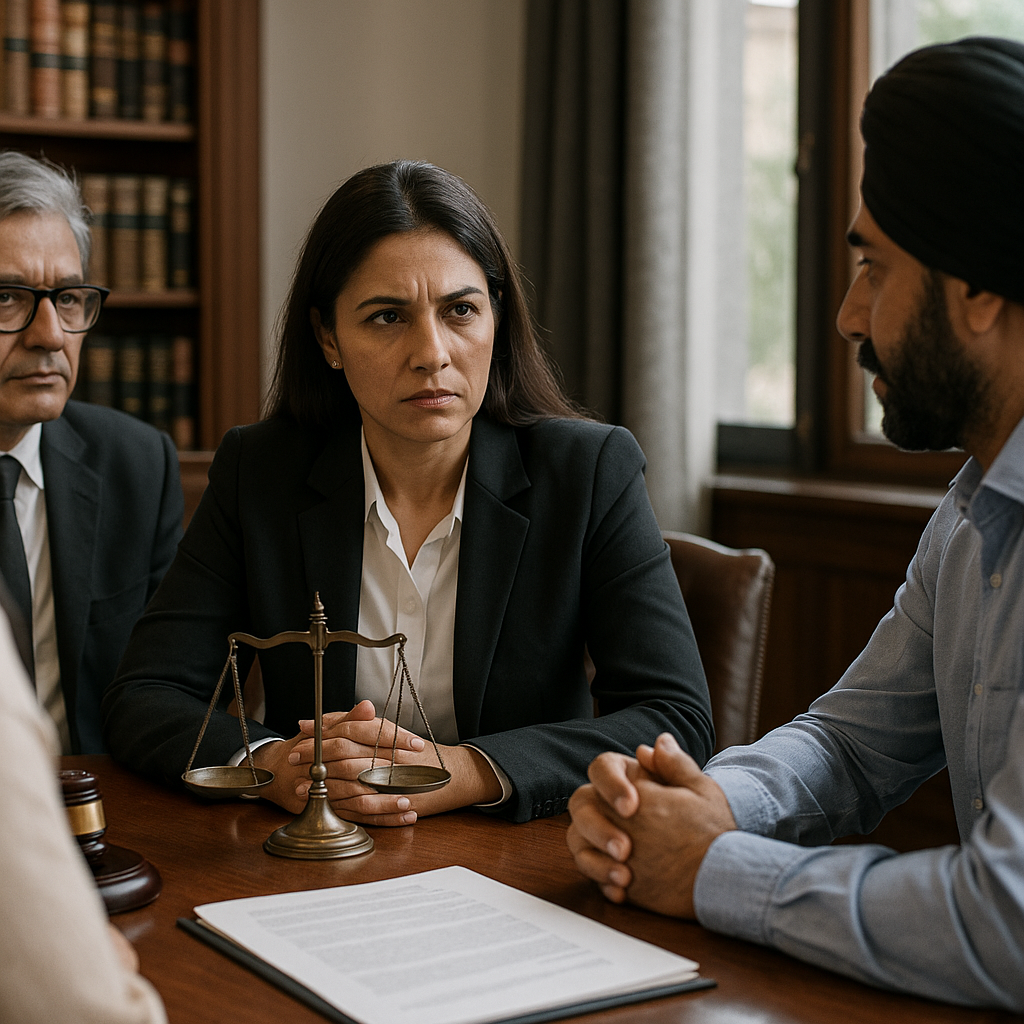

Property disputes in Chandigarh can turn into long battles, draining both money and peace of mind. Whether it’s brothers fighting over ancestral land in Mohali, siblings splitting a house in Sector 19, or a joint family wrangling over commercial space in Panchkula, these conflicts are rarely just about paperwork. Emotions, misunderstandings, and local customs mix in. Many people searching for property division lawyers Chandigarh want clarity – fast, fair settlements, and someone who actually understands the local legal maze.
If you’re staring at a property dispute, or just want to avoid one, you’re not alone. Here’s what you need to know about property division lawyers in Chandigarh, and how they set a high bar for fair, efficient outcomes.
Property division lawyers in Chandigarh specialise in resolving property disputes, family property settlements, inheritance issues, and joint property conflicts. They guide clients through local laws, partition suits, and civil litigation, ensuring fair division and protection of property rights. Their expertise covers real estate legal advice, documentation, and representation in Chandigarh courts, making them essential for anyone facing complex property matters in the region.
Why Property Division Becomes Contentious in Chandigarh
Dividing property in Chandigarh isn’t as simple as splitting a cake. The city has a unique mix of old family homes, rapidly appreciating real estate, and long-standing joint tenancies. This leads to disputes over:
-
Ancestral property: Multiple generations with unclear rights.
-
Joint family assets: Shared houses or shops where one branch wants out.
-
Commercial property: Disagreements over rental income or sale proceeds.
-
Inheritance: Confusion over wills, intestate succession, and rights of daughters or married sisters.
Add to that mix the city’s own real estate regulations and Punjab & Haryana High Court precedents, and you get a situation where even a small misunderstanding can snowball into years of litigation. Many families underestimate how quickly a minor disagreement can spiral once lawyers and the courts get involved.
The Role of Property Division Lawyers in Chandigarh
Property division lawyers Chandigarh act as both shield and sword for clients. Their work goes far beyond filling forms or sending legal notices. Here’s how they make a difference:
Expert Guidance on Local Property Laws
Chandigarh’s property laws pull from the Indian Succession Act, Hindu Succession Act, Transfer of Property Act, and various local municipal bylaws. A good lawyer will:
-
Interpret how these laws apply to your situation (e.g., who gets what under intestate succession).
-
Identify if partition by metes and bounds or by sale is best.
-
Spot issues like benami transactions, forged documents, or old oral agreements that can trip up a case.
Property Dispute Resolution Tactics
Most experienced property division lawyers Chandigarh try to avoid prolonged court battles. They use:
-
Mediation: Facilitating voluntary settlements between parties.
-
Negotiation: Drafting settlement deeds or family arrangements.
-
Arbitration: When parties agree to an arbitrator’s binding decision.
-
Court Litigation: Filing partition suits or defending against false claims in civil courts if talks fail.
Handling Inheritance and Family Property Settlement
Lawyers help families split property through:
-
Legal notices to co-owners or heirs.
-
Drafting and registering family settlement deeds.
-
Advising on tax implications and stamp duty.
-
Ensuring compliance with inheritance law Chandigarh, including rights of daughters, widows, and adopted children.
Documentation and Title Verification
Before any property is divided, lawyers check all relevant documents:
-
Title deeds and sale agreements.
-
Mutation records from the Chandigarh Estate Office.
-
Encumbrance certificates.
-
Historical records for ancestral or agricultural land.
A single missing paper or old mortgage can delay settlement for years. This is why experienced lawyers never skip the documentation checklist.
Types of Property Disputes Handled by Chandigarh Lawyers
Property division lawyers Chandigarh tackle a wide range of cases. Each type comes with its own legal twists.
Partition Suits (Joint Property Disputes)
Partition suits are the most common property dispute resolution method when co-owners can’t agree. Some key points:
-
The suit is filed in the local civil court (usually District Court, Chandigarh).
-
The court may order physical division (metes and bounds) or sale and distribution of proceeds.
-
All co-owners must be made parties to avoid future legal challenges.
-
If minors or widows are involved, the court appoints a guardian and ensures their interests are protected.
Inheritance Disputes
Inheritance law Chandigarh is a mix of central and state rules. Disputes often arise due to:
-
Lack of a will, leading to confusion under intestate succession.
-
Disputed or forged wills.
-
Claims by daughters, stepchildren, or estranged relatives.
-
Overlapping claims on self-acquired vs ancestral property.
Lawyers examine family trees, succession certificates, and historical ownership to clarify who gets what.
Real Estate Legal Advice and Builder-Buyer Conflicts
Apart from family disputes, Chandigarh’s booming property market has led to:
-
Builder delays or incomplete projects.
-
Unregistered sale agreements.
-
RERA (Real Estate Regulatory Authority) complaints.
Lawyers offer real estate legal advice, help file consumer complaints, and represent clients before RERA Chandigarh and consumer forums.
Eviction, Trespass, and Possession Suits
Sometimes, property disputes involve outsiders or tenants. Lawyers handle:
-
Eviction of illegal occupants or defaulting tenants.
-
Suits for recovery of possession.
-
Criminal complaints for trespass or encroachment.
All these require different legal strategies and evidence.
Step-by-Step: How Chandigarh Lawyers Approach Property Division
If you’re wondering what actually happens once you hire a property division lawyer in Chandigarh, here’s a typical process:
- Initial Consultation
-
Collect all available property documents.
-
Share family details, past agreements, and any ongoing litigation.
- Title and Document Verification
- Lawyer checks ownership, chain of title, encumbrances, and any pending municipal dues.
- Legal Notice or Negotiation
- If talks fail, a legal notice is sent to other parties, outlining your claim and proposed settlement.
- Filing of Partition Suit or Settlement Deed
-
If no amicable solution, lawyer drafts and files a partition suit in civil court.
-
Alternatively, if parties agree, a family settlement deed is drafted and registered.
- Court Proceedings
-
Court issues notice to all parties.
-
Evidence is submitted (property papers, genealogy, prior agreements).
-
Court may appoint a commissioner to inspect and suggest division.
-
Final order is passed – either division by metes and bounds or sale and distribution.
- Execution and Mutation
- After decree, property is mutated in municipal records to reflect new ownership.
This process can take anywhere from a few months (amicable settlement) to several years (contested litigation). The best lawyers push for early settlement where possible.
Key Laws and Precedents Governing Property Division in Chandigarh
A strong property division case always rests on a clear understanding of the law. Chandigarh lawyers regularly apply:
-
Hindu Succession Act, 1956: Governs inheritance and partition among Hindus, Sikhs, Jains, and Buddhists.
-
Indian Succession Act, 1925: Applies to Christians, Parsis, and others.
-
Transfer of Property Act, 1882: Covers sale, mortgage, and transfer rules.
-
Punjab Land Revenue Act: Used for agricultural land and mutation.
-
Local Municipal Bylaws: For transfer, registration, and mutation of property in Chandigarh.
Important High Court and Supreme Court judgments (e.g., on daughters’ rights in ancestral property, validity of oral partitions, or on family settlements) often decide the outcome. Chandigarh lawyers stay updated on these precedents.
Common Mistakes That Delay or Damage Property Settlements
Even with a good case, small errors can cost years. Here’s what experienced property division lawyers Chandigarh warn against:
-
Incomplete parties: Forgetting to include all co-owners or legal heirs in a suit.
-
Missing documents: Failing to produce original title deeds, old agreements, or mutation records.
-
Unregistered settlements: Oral or unregistered family arrangements can be challenged and ignored in court.
-
Ignoring tax or stamp duty: Understating property value to save on stamp duty can lead to penalties or nullification.
-
Delay in action: Waiting too long can allow adverse possession claims or trigger limitation period issues.
If you’re serious about a fair property settlement, get your paperwork and parties in order before you start.
Choosing the Right Property Division Lawyer in Chandigarh
Not all lawyers are the same. Chandigarh’s top property division lawyers offer:
-
Deep local experience: Familiarity with Punjab & Haryana High Court, local municipal offices, and local property customs.
-
Strong negotiation skills: Many disputes end at the table, not in court.
-
Transparent billing: Clear fee structures, no hidden charges.
-
Reputation for integrity: Avoiding shortcuts or forged documents, which can backfire.
-
Network of experts: Access to property valuers, surveyors, and document specialists.
Ask for references, see past case outcomes, and check if the lawyer has handled property types similar to yours (e.g., agricultural vs. urban, ancestral vs. self-acquired).
How Property Division Differs for Various Property Types
Ancestral vs. Self-Acquired Property
-
Ancestral property: Passed down four generations, all coparceners (sons, daughters) have birthright. Partition can be demanded at any time.
-
Self-acquired property: The owner decides how to divide, either by will or sale. Heirs get a share only if owner dies intestate.
Agricultural Land vs. Urban Property
-
Agricultural land: Partition requires revenue department involvement, mutation in land records, and sometimes physical demarcation.
-
Urban property: Division handled in civil courts, with registration and mutation at Estate Office or municipal office.
Commercial Property
- Shops, offices, or industrial plots: Often involve tenancy rights, rental income, or development agreements. Division may require court-monitored sale and distribution.
Costs, Timelines, and Practical Realities
Property settlement isn’t cheap or quick. Here’s what most clients in Chandigarh should expect:
-
Legal fees: Range from Rs. 50,000 for simple settlements to several lakhs for contested partition suits.
-
Stamp duty and registration: Varies by property type and location. Family settlements attract lower stamp duty than outright sale.
-
Court fees: Based on property value, up to 1.5% in some cases.
-
Timelines: Amicable settlements can close in 3 – 6 months. Contested cases may drag on for 3 – 7 years or more.
-
Other expenses: Property valuation, survey fees, and sometimes security costs if property is in dispute.
Honestly, most people underestimate the time and money needed. A frank discussion with your lawyer about costs can prevent surprises later.
Alternatives to Litigation: Settlement, Mediation, and Family Arrangements
Chandigarh courts encourage parties to settle property disputes outside the courtroom. Some common alternatives:
-
Family settlement deed: All parties agree to terms, sign the deed, and register it. Quick, cheap, and generally respected by courts.
-
Mediation: Third-party mediator helps parties find common ground. Often used before or during litigation.
-
Arbitration: Less common in family property disputes, but possible if all parties agree.
These methods save time and money, but only work if everyone is willing to compromise. If there’s deep mistrust or allegations of fraud, court intervention may be the only way.
What to Bring to Your First Meeting With a Property Division Lawyer
Arriving prepared can speed up your case. Bring:
-
Original title deeds, sale agreements, and property tax receipts.
-
Mutation and jamabandi (land record) copies.
-
Any family settlement deeds, wills, or succession certificates.
-
List of all current co-owners, heirs, and their addresses.
-
Details of any ongoing or past litigation on the property.
The more details you provide upfront, the faster your lawyer can spot issues or suggest solutions.
How Chandigarh Courts Handle Partition and Property Disputes
The District Courts in Chandigarh, along with the Punjab & Haryana High Court, handle most property division cases. Here’s how a typical partition suit moves:
-
Suit is filed with all relevant documents and parties.
-
Court issues notice to all co-owners or heirs.
-
Written statements and objections are filed.
-
Evidence is recorded – witnesses, documents, and sometimes site inspections.
-
Court appoints a commissioner for physical division if needed.
-
Final order is passed, and decree is executed by updating municipal or land records.
Appeals can be made to the High Court, but this adds years to the process. Many clients settle before reaching this stage.
Frequently Asked Questions
What documents are required for a partition suit in Chandigarh?
You will need original title deeds, sale agreements, mutation records, jamabandi (land records), family trees, and any prior settlement deeds or wills. Having all co-owners’ details and proof of possession is also important.
How long does a property settlement case take in Chandigarh?
Amicable settlements through deeds can close in 3 – 6 months. Contested cases in civil courts may take 3 – 7 years, depending on complexity and court workload.
Can daughters claim a share in ancestral property in Chandigarh?
Yes, under the Hindu Succession (Amendment) Act, 2005, daughters have equal rights as sons in ancestral property, regardless of marital status, if the parent died after 2005.
What is the process for resolving joint property disputes?
-
Gather all property documents and co-owner details.
-
Attempt negotiation or family settlement.
-
If talks fail, send a legal notice.
-
File a partition suit in civil court.
-
Court issues notices, records evidence, and passes a final order.
-
Property is divided or sold, and mutation is updated in records.
What are the common mistakes in property division cases?
Missing parties, incomplete documentation, relying on unregistered settlements, and ignoring stamp duty or tax issues are frequent errors that cause delays or legal setbacks.
How much does a property division lawyer in Chandigarh charge?
Fees vary by complexity. Simple settlements may cost Rs. 50,000 – 1,00,000, while contested partition suits can cost several lakhs, plus court and registration fees.
What is a family settlement deed, and is it legally valid?
A family settlement deed is a written agreement among family members for property division. It must be signed by all parties and registered with the local authority to be legally enforceable.
Can property disputes be settled through mediation in Chandigarh?
Yes, mediation is encouraged by courts. It involves a neutral third party helping both sides reach a voluntary agreement. It saves time and legal costs if parties are willing.
What is the difference between ancestral and self-acquired property?
Ancestral property is inherited up to four generations and can be claimed by all coparceners. Self-acquired property is bought or acquired by an individual, who can decide its division.
Which laws apply to property division in Chandigarh?
Key laws include the Hindu Succession Act, Indian Succession Act, Transfer of Property Act, and local municipal regulations. Specific provisions depend on religion, property type, and family structure.
Can an unregistered family settlement be enforced in court?
Unregistered oral or written settlements are risky and can be challenged. Courts prefer registered deeds as evidence of a genuine, binding agreement.
What happens if one co-owner refuses to cooperate in a partition?
If a co-owner refuses, the other can file a partition suit. The court will issue notice to all parties, hear evidence, and pass an order for division or sale of the property.
Conclusion
Property division in Chandigarh is rarely straightforward. Local laws, family dynamics, and rising property values make disputes both common and complex. The best property division lawyers Chandigarh combine legal expertise with practical negotiation skills, offering real solutions instead of endless arguments. If you’re facing a property settlement, invest time in documentation, pick a lawyer with local experience, and stay open to settlement – because the longer a dispute drags, the harder it is for anyone to win.