
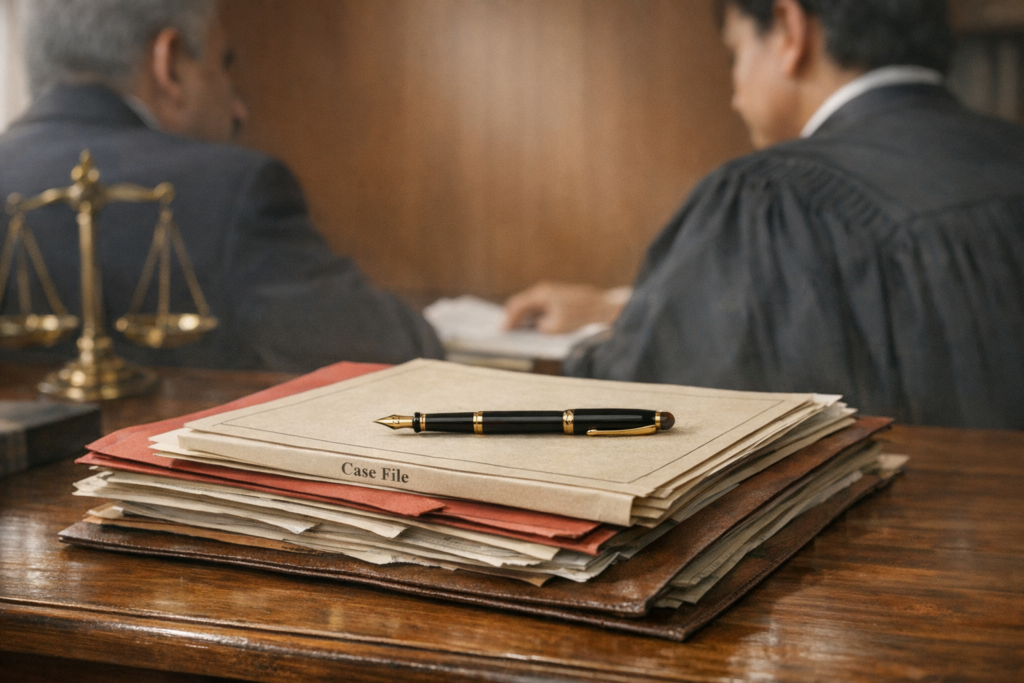

Introduction: Understanding Supreme Court Litigation Process India
Navigating the Supreme Court litigation process India can be a daunting experience, especially for first-time litigants. As the highest judicial forum and final court of appeal in India, the Supreme Court exercises vast constitutional and legal authority under the Constitution of India. This article aims to demystify the SC procedure for beginners, providing a clear, step-by-step explanation of the court process India, filing case SC guide, and litigation steps India. By comprehensively outlining the legal process explained, this resource empowers readers with foundational knowledge and practical insights into Supreme Court litigation.
Conceptual Overview of Supreme Court Litigation Process India
The Supreme Court of India, established under Article 124 of the Constitution, is entrusted with the ultimate authority to interpret constitutional provisions and adjudicate significant legal disputes. It functions both as an appellate court and a court of original jurisdiction in certain matters. The litigation process before the Supreme Court involves specific procedural steps and legal formalities designed to ensure justice, efficiency, and adherence to the rule of law.
For first-time litigants, understanding the nature and scope of the Supreme Court’s jurisdiction is crucial. The Court entertains appeals against judgments from High Courts, exercises writ jurisdiction under Article 32 for the enforcement of fundamental rights, and handles cases involving constitutional questions or substantial legal interpretations.
Statutory Framework Under Indian Law Governing Supreme Court Litigation
The Supreme Court litigation process India is primarily governed by the following statutory and constitutional provisions:
- Constitution of India:
- Article 124: Establishes the Supreme Court, its composition, and appointment of judges.
- Article 131: Original jurisdiction in disputes between states or between the Centre and states.
- Article 132 to 136: Appellate jurisdiction, including special leave to appeal.
-
Article 32: Right to constitutional remedies, enabling writ petitions directly before the Supreme Court.
-
Supreme Court Rules, 2013: These rules prescribe detailed procedural guidelines for filing petitions, appeals, and other matters before the Supreme Court.
-
Code of Civil Procedure, 1908 (CPC) and Code of Criminal Procedure, 1973 (CrPC): Governing procedural aspects in civil and criminal appeals respectively.
-
Limitation Act, 1963: Governs the time frame within which appeals or petitions must be filed.
This statutory framework ensures the legal process explained is orderly and consistent with constitutional mandates.
Rights, Duties, and Legal Obligations of Litigants in SC Procedure for Beginners
Every litigant approaching the Supreme Court must understand their rights and duties within the litigation framework:
Rights
- Right to Access Justice: Litigants have the constitutional right to approach the Supreme Court for redressal of grievances, particularly regarding fundamental rights.
- Right to Legal Representation: Parties may be represented by advocates enrolled under the Advocates Act, 1961, with the Supreme Court Advocates-on-Record having exclusive rights to file pleadings.
- Right to Fair Hearing: Ensured through due process and adherence to procedural rules.
Duties
- Compliance with Procedural Norms: Strict adherence to filing formats, timelines, and court procedures is mandatory.
- Disclosure of Relevant Facts: Honesty and completeness in pleadings are essential.
- Payment of Court Fees and Compliance with Costs: Litigants must comply with prescribed fees and bear litigation costs as directed.
Legal Obligations
- Adherence to Bar Council of India Regulations: Advocates and litigants must respect ethical norms, avoiding solicitation or improper conduct.
- Avoidance of Frivolous Litigation: The court discourages vexatious or mala fide petitions.
Procedural Aspects and Legal Mechanisms in Supreme Court Litigation Process India
The SC procedure for beginners involves distinct stages, each governed by procedural rules and legal mechanisms:
1. Preliminary Assessment and Legal Consultation
Understanding the nature of the dispute and suitability for Supreme Court litigation is the initial step. Not all cases qualify for Supreme Court jurisdiction; hence, legal advice is crucial.
2. Drafting and Filing the Petition/Appeal
- Types of Petitions: Special Leave Petition (SLP), Writ Petition, Civil or Criminal Appeal.
- Filing Requirements: Submission of typed petition in prescribed format, index, cause title, and affidavits.
- Advocate-on-Record (AoR): Only AoRs can file petitions in the Supreme Court per Supreme Court Rules, 2013.
3. Admission Stage
The Court examines the petition for maintainability and prima facie merit. Admission hearings determine if the matter deserves a detailed hearing.
4. Listing and Hearing
Once admitted, the case is listed for hearing. Both parties present arguments before the bench.
5. Judgment and Orders
The Court delivers its decision, which could be final or interlocutory.
6. Execution and Review
Depending on the judgment, parties may seek execution or file review petitions under Order XLVII of the CPC if grounds exist.
Timelines and Limitation
- Appeals to the Supreme Court must be filed within prescribed limitation periods, typically 90 days for civil appeals and 60 days for criminal appeals.
- Delay in filing may be condoned by the Court upon sufficient cause.
Important Procedural Rules to Note:
| Stage | Key Rules/Acts | Notes |
|---|---|---|
| Filing Petition | Supreme Court Rules, 2013 | Must be filed by Advocate-on-Record |
| Admission Hearing | Supreme Court Practice | Preliminary hearing to decide admission |
| Appeal Jurisdiction | Constitution Articles 132-136 | Defines scope and types of appeals |
| Limitation Periods | Limitation Act, 1963 | Time limits for filing appeals |
| Review/Reconsideration | Order XLVII, CPC | Grounds for review of judgment |
Judicial Interpretation and Landmark Case Laws on Supreme Court Litigation Process India
Judicial pronouncements have clarified and shaped the SC procedure for beginners. Some landmark judgments include:
- K.K. Verma v. Union of India (1965) 2 SCR 662: Affirmed the Supreme Court’s power under Article 136 to grant special leave to appeal.
- R.C. Cooper v. Union of India (1970) 1 SCC 248: Emphasized the Court’s role in constitutional interpretation.
- State of Bihar v. Kameshwar Singh (1952) AIR 252: Delineated the original jurisdiction under Article 131.
- S.P. Gupta v. Union of India (1982) 2 SCC 149: Expanded the scope of public interest litigation.
- L. Chandra Kumar v. Union of India (1997) 3 SCC 261: Confirmed the Supreme Court’s supervisory jurisdiction over tribunals.
These judgments elucidate the scope and contours of the Supreme Court’s adjudicatory functions and procedural expectations.
Practical Implications for Individuals and Businesses Engaging in Supreme Court Litigation
For individuals and corporate entities, understanding the litigation steps India in the Supreme Court is vital to manage expectations and resources:
- Cost and Time Considerations: Supreme Court litigation is often time-consuming and costly; prudent case selection is necessary.
- Documentation and Compliance: Meticulous preparation of pleadings and adherence to procedural rules can mitigate delays.
- Impact of Judgments: Supreme Court rulings have binding precedent effect across India, influencing legal certainty and business stability.
- Use of Technology: The Supreme Court’s e-filing and video conferencing facilities facilitate access and efficiency.
Businesses should engage qualified legal counsel familiar with SC procedure for beginners to navigate complexities effectively.
Common Misconceptions and Clarifications Regarding Court Process India
-
Misconception 1: The Supreme Court accepts all appeals filed.
Clarification: The Court exercises discretionary power to admit or dismiss appeals based on merit. -
Misconception 2: Litigants can personally file petitions without advocates.
Clarification: Only Advocates-on-Record may file petitions; however, parties can appear personally after admission. -
Misconception 3: Filing a case in the Supreme Court guarantees speedy justice.
Clarification: Cases may take considerable time depending on complexity and Court scheduling. -
Misconception 4: The Supreme Court decides all factual disputes.
Clarification: The Court primarily addresses legal and constitutional questions; factual matters are generally examined at lower courts.
Frequently Asked Questions (AEO-Optimized)
Q1: What is the first step in the Supreme Court litigation process India?
A1: The first step is determining the appropriate jurisdiction and drafting the petition or appeal, which must be filed by an Advocate-on-Record as per the Supreme Court Rules, 2013.
Q2: How long does it take for the Supreme Court to admit a petition?
A2: Admission hearings typically occur within weeks to months after filing; however, timelines vary based on court workload and case urgency.
Q3: Can an individual file a writ petition directly in the Supreme Court?
A3: Yes, under Article 32 of the Constitution, individuals can file writ petitions for enforcement of fundamental rights.
Q4: What are the types of cases heard directly by the Supreme Court?
A4: Original jurisdiction cases (inter-state disputes), constitutional questions, appeals from High Courts, and writ petitions.
Q5: Is it mandatory to engage an Advocate-on-Record for Supreme Court cases?
A5: Yes, only Advocates-on-Record are authorized to file pleadings and documents before the Supreme Court.
Emerging Trends and Legal Developments in Supreme Court Litigation Process India
Recent developments influencing the court process India include:
- Digitization and E-Filing: The Supreme Court has implemented comprehensive e-filing systems enhancing accessibility and transparency.
- Virtual Hearings: Post-pandemic norms have institutionalized video conferencing for hearings, expanding reach.
- Public Interest Litigation (PIL) Expansion: The Court continues to adopt a proactive stance in adjudicating matters of public importance.
- Alternative Dispute Resolution (ADR) Encouragement: The Court promotes ADR mechanisms to reduce litigation burden.
- Judicial Reforms: Proposals to streamline case management and reduce pendency are being actively discussed.
These trends reflect the evolving landscape of the Supreme Court litigation process India, making it more efficient and citizen-friendly.
The Supreme Court remains the guardian of the Constitution and the final arbiter of legal disputes, making familiarity with its procedures essential for effective litigation.
For further insights into other legal processes and procedural guides across Indian courts, visit Sheokand Legal’s Knowledge Repository, a trusted resource for comprehensive and authoritative legal information.