
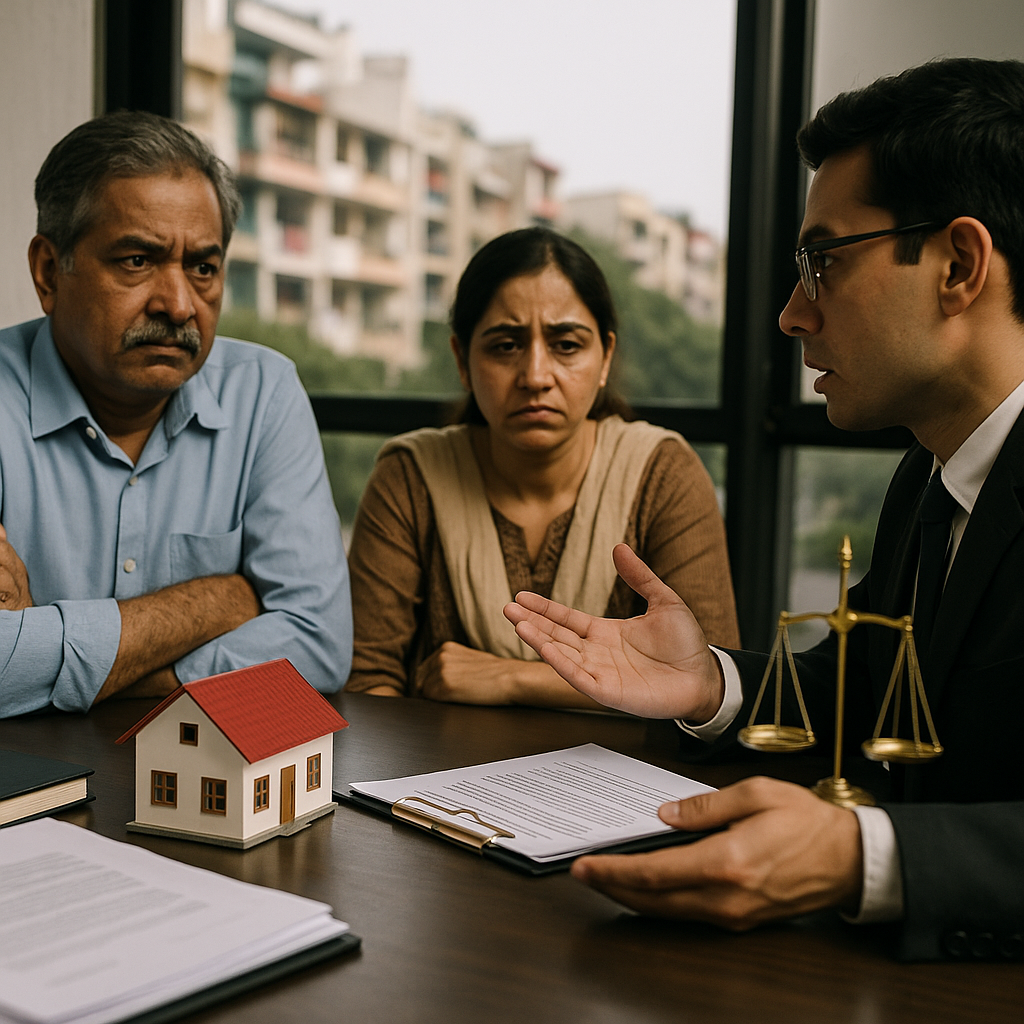

Property disputes in Chandigarh rarely start with a court summons. More often, they’re whispered about over kitchen tables, argued in lawyer’s offices, and dragged through endless paperwork before anyone even thinks of stepping inside a courtroom. If you’re tangled in a property dispute Chandigarh residents know that most cases never see a judge. Why do these battles stall so early? Let’s get straight to the heart of it.
Most Chandigarh property disputes stall before reaching court because of unclear land records, family pressures, local power dynamics, and a slow, complicated legal process. Many people try mediation or informal negotiation first, partly to avoid the cost, risk, and long wait times in the Chandigarh legal system. The result: property settlement issues often drag on for years without ever entering formal court process property law.
Why Property Disputes in Chandigarh Are So Common
You don’t have to look far in Chandigarh to find an argument over a plot, a house, or even a boundary wall. But what’s fueling all these land ownership conflicts?
-
Inherited property confusion: Many families inherit property without clear wills or updated records. This causes disputes among siblings and extended relatives.
-
Unclear land titles: Outdated or missing documentation is common, especially for older properties or those handed down informally.
-
Rapid real estate growth: Chandigarh’s demand for land and flats has exploded, making even small plots valuable enough to fight over.
-
Urban expansion: Areas previously considered rural are now prime real estate, leading to overlapping claims and sudden legal delays real estate investors didn’t expect.
You’ll often hear stories of two families claiming the same kothi or a builder and a farmer locked in battle over survey maps from the 1980s. The stories vary, but the root problems are usually paperwork, family, or money.
The Real Barriers: Why Disputes Rarely Reach Court
People assume court is the first stop for a property dispute Chandigarh throws up. Actually, it’s the last resort for most.
Family Pressure and Social Stigma
Dragging relatives to court still carries a social cost in Chandigarh. Most families will try to settle quietly, even if it takes years:
-
Elders often pressure younger members to avoid legal action, fearing loss of family reputation.
-
Many believe mediation property cases will save face, even if the solution isn’t perfect.
-
Neighbours and community leaders sometimes step in, acting as informal referees.
Sometimes, this works. More often, it just delays the inevitable.
Poor Land Records and Documentation
You can’t go to court if you can’t prove what you own. Chandigarh’s property records are a mess for many older houses and plots:
-
Mutation (jamabandi) records are often missing or outdated.
-
Multiple people may hold different sale deeds for the same land.
-
Registry offices sometimes have handwritten entries or conflicting survey numbers.
Trying to fix this before filing a case can take months, if not years.
Legal Advice and Fear of Cost
Most people in Chandigarh consult a lawyer before filing a formal case. Here’s what usually happens:
-
Lawyers warn about the property case backlog and years-long court process property law.
-
High legal fees and possible loss of property make families hesitate.
-
There’s a real fear of getting stuck in appeals or being forced into a bad settlement.
So they wait. Or try one more round of negotiation.
The Role of Mediation and Informal Settlement
Mediation isn’t just a buzzword in Chandigarh property disputes. It’s often the only way cases move forward at all.
Mediation: How It Works Locally
While formal mediation centers exist, most cases start informally:
-
Family elders, retired government officials, or respected neighbours act as mediators.
-
Both sides present their claims, usually with whatever paperwork they can find.
-
Mediators suggest a compromise, which might be a cash payment, a division of land, or an agreement to sell and split proceeds.
Sometimes, the compromise is written and registered. Often, it’s just a handshake and a promise.
Advantages and Drawbacks
Why do people prefer mediation?
-
It’s faster than the court process property law.
-
Costs are lower, especially if no lawyers are involved.
-
There’s less risk of a public fight, which matters to many families.
But mediation has limits:
-
No formal enforcement if someone backs out.
-
Power imbalances – wealthier or more influential parties often get their way.
-
Not always possible in bitter or high-value disputes.
The Chandigarh Legal System: Why Cases Move So Slowly
Even if you decide to file a property dispute Chandigarh court, don’t expect a quick result. The system grinds forward at its own pace.
Court Process in Property Law
A typical property case in Chandigarh follows this sequence:
-
File a plaint (complaint) with all property documents.
-
Defendant files a written statement.
-
Both sides exchange evidence and documents.
-
Court frames issues (the exact points of dispute).
-
Witnesses are examined and cross-examined.
-
Arguments are heard, judgment is reserved, and then finally delivered.
Each step can take months, especially if someone asks for an adjournment or files an interim application.
Property Case Backlog: The Numbers
Chandigarh’s district courts are buried under thousands of pending property cases. According to the National Judicial Data Grid, property matters often wait 5 – 7 years for a final order. Appeals in the Punjab and Haryana High Court can stretch this even longer.
Legal Delays in Real Estate: Systemic Factors
-
Shortage of judges: Too few benches for too many cases.
-
Procedural complexity: Each hearing can be delayed by missing documents or absent parties.
-
Frequent adjournments: Lawyers often seek more time, sometimes for genuine reasons, sometimes just to pressure the other side.
-
Lack of digitization: Many records are still paper-based, making searches and verifications slow.
Key Laws and Regulations Governing Property Disputes in Chandigarh
Understanding the legal backbone behind property settlement issues can help you avoid rookie mistakes.
Important Statutes and Rules
-
Transfer of Property Act, 1882: Governs sale, mortgage, lease, and gift of property.
-
Punjab Land Revenue Act, 1887: Applies to Chandigarh as a Union Territory; covers land revenue records, mutations, and partition.
-
Indian Succession Act, 1925: Handles inheritance when there’s no will.
-
Registration Act, 1908: Requires registration of sale deeds and other property transactions.
Mutation and Registration
Mutation is the process of updating land revenue records after a sale, inheritance, or gift. Without mutation, your name on the sale deed is not enough to prove ownership in many cases. Registration of documents at the sub-registrar’s office is mandatory for most property transfers.
Recent Changes and Digitization Efforts
Chandigarh Administration has tried to digitize land records and streamline mutation, but progress is slow. Some records are available online, but plenty still require manual verification at local offices.
Common Types of Property Disputes in Chandigarh
Not all disputes are the same. Here are the most frequent types:
-
Partition suits: Family members fighting over division of ancestral property.
-
Title disputes: Conflicting sale deeds, missing records, or forged documents.
-
Encroachment cases: Neighbour builds boundary wall inside your plot or grabs extra land.
-
Builder-buyer conflicts: Delayed possession, poor construction, or changes in layout plans.
-
Tenancy disputes: Disagreements between landlords and tenants over rent, eviction, or maintenance.
Each has its own quirks, but the common thread is confusion over ownership and documentation.
Documentation Problems: The Root Cause
If you ask most lawyers, they’ll say over 70% of property dispute Chandigarh cases start because of bad paperwork. Here’s why:
Outdated or Missing Documents
-
Sale deeds not registered or lost over time.
-
Mutation not done after inheritance or sale.
-
Power of attorney used for sale, but not properly stamped or registered.
Multiple Claimants
-
Same land sold to two different buyers.
-
Old family settlements never recorded formally, leading to fresh claims years later.
Forgery and Fraud
-
Fake signatures or forged documents submitted to registry offices.
-
Middlemen promising shortcuts, only to disappear with money.
Practical Steps Before Approaching Court
If you’re stuck in a property dispute Chandigarh residents face, don’t rush to court. Here’s what you should do first:
-
Gather all documents: Sale deeds, mutation records, tax receipts, and any correspondence.
-
Get legal advice: Find a lawyer who specializes in property law and knows the local system.
-
Attempt mediation: Try to resolve with the other party, possibly using a neutral third party.
-
Check land records: Visit the revenue office or use Chandigarh’s online portals to verify current records.
-
Consider cost and time: Weigh the likely expenses and the years it may take in court.
If you still have no resolution, only then file a formal case.
Why Mediation Property Cases Are Often Preferred in Chandigarh
People aren’t just afraid of court – they’re practical. Mediation property cases are often the best option for several reasons:
-
Lower cost: No need for repeated legal fees and court costs.
-
Confidential: Family disputes stay private, not splashed across public records.
-
Faster: Many cases settle in weeks or months, not years.
But, as mentioned earlier, mediation is not always possible. If the dispute is bitter, or one side refuses to cooperate, court may be the only option left.
Social, Cultural, and Psychological Factors
It’s not just paperwork and law that slow things down. Chandigarh’s social structure plays a big part.
Family Reputation and Honour
No one wants to be the person who drags their uncle or cousin to court. There’s a strong sense of family honour and pressure to keep things inside the four walls.
Fear of Retaliation
In some land ownership conflicts, especially involving influential parties, there’s a real fear of social or even physical retaliation if you push too hard, too fast.
Emotional Attachment
Many disputes are about more than money. People fight over ancestral homes because of memories and sentimental value. This makes compromise harder, and court cases even more stressful.
The Future: Can Chandigarh’s Property Dispute System Improve?
There’s slow progress, but nobody expects miracles overnight. Here’s what might help:
-
Digitization of records: Making all land and property records searchable online.
-
Legal awareness programs: Teaching people about proper documentation and legal rights.
-
More mediation centers: Formalizing and expanding mediation property cases so more people can settle out of court.
-
Faster court processes: Increasing the number of judges and using technology to speed up hearings.
Frequently Asked Questions
What documents are required to prove property ownership in Chandigarh?
You need the registered sale deed, mutation (jamabandi) records, property tax receipts, and sometimes the latest possession certificate. For inherited property, a legal heir certificate or succession certificate is also important.
How long does it take to resolve a property dispute Chandigarh court?
Most property cases in Chandigarh district courts take between 5 to 7 years for a final judgment. Appeals to the High Court can add several more years.
Can property disputes be settled outside court in Chandigarh?
Yes, many disputes are resolved through informal negotiation or formal mediation. Settlement agreements can be registered to make them legally binding, but enforcement may require court intervention if someone backs out.
What is the first step if I have a property dispute in Chandigarh?
Start by collecting all relevant documents and verifying land records at the revenue office. Next, consult a property lawyer to assess your options. Mediation is usually tried before filing a formal case.
Which laws govern property disputes in Chandigarh?
Key laws include the Transfer of Property Act, 1882, Punjab Land Revenue Act, 1887, Indian Succession Act, 1925, and Registration Act, 1908. Local rules and Chandigarh Administration notifications may also apply.
Why are Chandigarh property records often inaccurate or missing?
Many records are decades old and were kept manually. Mutation was not always done after inheritance or sale, and digitization is still ongoing.
What is mutation, and why does it matter for property disputes?
Mutation updates the official land records after property transfer, inheritance, or sale. Without mutation, your legal claim can be challenged, especially in court.
Can I file a property dispute case online in Chandigarh?
Filing is mostly offline at present, though you may be able to check case status or land records online. Some steps, like document upload or e-filing, are being introduced gradually.
How does mediation work in Chandigarh property cases?
Mediation can be formal (through court-appointed centers) or informal (family elders or mutual friends). Both sides present their claims, and a neutral party helps them reach a compromise.
What is the role of the High Court in Chandigarh property disputes?
The Punjab and Haryana High Court hears appeals from district courts and can set important legal precedents. It also handles writ petitions involving government land or major legal questions.
Are builder-buyer disputes common in Chandigarh?
Yes, especially in new housing societies or apartment projects. Common issues include delayed possession, changes in layout, and poor construction quality.
How can I avoid property disputes in Chandigarh?
-
Verify all documents before buying.
-
Ensure mutation and registration are done promptly.
-
Get legal advice for inheritance or family settlements.
-
Use written agreements for all transactions.
Conclusion
Most property disputes in Chandigarh never reach court because of tangled paperwork, family dynamics, and fear of long legal delays real estate cases bring. Mediation property cases and informal settlements are the norm, not the exception. If you’re facing property settlement issues, focus on documentation, legal advice, and exploring all options before considering the slow court process property law demands. The Chandigarh legal system is slowly improving, but patience and preparation remain your best tools.