


Most people walk into a property dispute expecting a battle over ownership or boundaries. Very few realise that local rules – Chandigarh property bylaws, zoning regulations of Punjab and Haryana, or a missing NOC for property transfer – can decide the case before it even starts. Whether you’re fighting over a family home, a commercial plot, or just a boundary wall, ignoring these rules can turn your strongest legal argument into a non-starter. If you want to protect your interests, you can’t skip understanding how local bylaws and zoning rules shape the outcome of property disputes in Chandigarh and the neighbouring states.
If your property doesn’t comply with Chandigarh property bylaws or the zoning regulations of Punjab and Haryana, your dispute case can collapse – no matter how strong your paperwork or historical claim is. Courts and municipal authorities often refuse to entertain cases, grant relief, or regularise ownership until all local rules are followed, including building code compliance, approved land use, and proper municipal approvals. Always check your property’s legal status and regularisation history before filing or defending a dispute.
Why Local Bylaws and Zoning Rules Matter in Property Disputes
Local property laws aren’t just paperwork – they’re the rules that decide what’s legal on your land, who can own or use it, and what can be built. In Chandigarh and the broader Punjab-Haryana region, these laws are strict and detailed. One missed approval or a small violation can upend years of planning or investment. If you’re in a dispute, the first thing any court or authority checks is whether your property follows the Chandigarh property bylaws or the relevant zoning regulations.
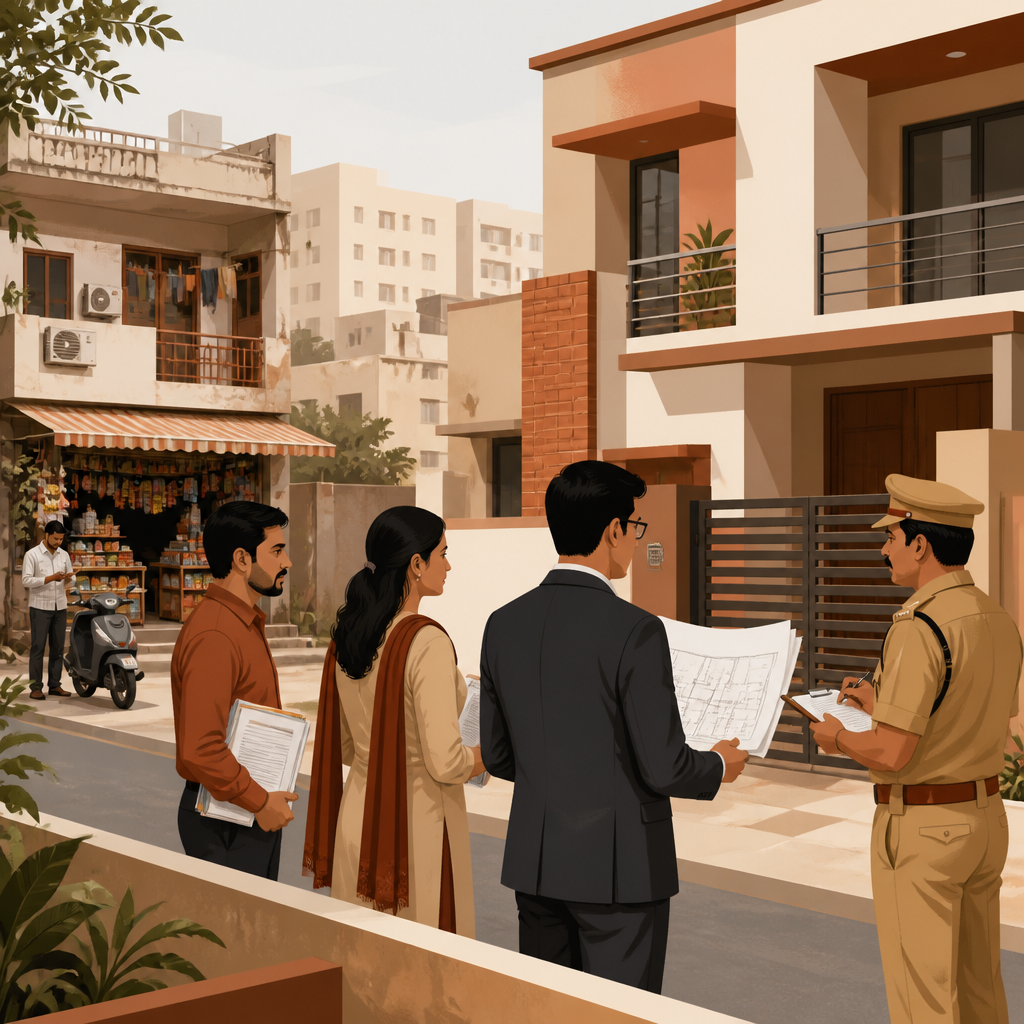
For example, the Chandigarh Master Plan 2031 lays out exactly which areas can be residential, commercial, or institutional. If you’re running a shop in a residential zone or adding an extra floor without permission, your case can be thrown out or delayed for years. The same goes for properties in Panchkula or Mohali – each has its own set of local rules, and the courts expect owners to know them.
If you’re dealing with a family partition, boundary dispute, or inheritance claim, you’ll find that municipal approvals and land use compliance often matter just as much as what’s written in your sale deed or will. Honestly, this catches out more people than you’d think.
Key Elements of Chandigarh Property Bylaws and Zoning Regulations
Understanding the specific rules that apply to your property is half the battle. Chandigarh’s bylaws are detailed, covering everything from minimum plot size to the maximum number of floors, setbacks, parking requirements, and green space. Punjab and Haryana have their own zoning regulations, but the principles are similar: define what’s allowed, limit what’s not, and create a paper trail for every change.
What Do Chandigarh Property Bylaws Cover?
Chandigarh property bylaws are issued by the Department of Urban Planning and enforced by the Chandigarh Administration. They apply to all properties within the Union Territory. The main areas covered include:
- Land Use: Clear demarcation of residential, commercial, institutional, and mixed-use zones. You can’t run a business or school in a purely residential area unless the zoning allows it.
- Building Code Compliance: Rules for setbacks, plot coverage, floor-area ratio (FAR), height restrictions, and structural safety. Even small deviations – like adding a balcony or covering the open space – need approval.
- Municipal Approvals: Every new construction, extension, or change of use needs permission from the Chandigarh Municipal Corporation or Estate Office. Without these, the building is considered unauthorised.
- Property Regularization: For properties built before 1995 or during amnesty periods, the administration sometimes offers regularisation schemes. You must pay penalties and bring the property into compliance.
- NOC for Property Transfer: Sale, gift, or inheritance often needs a No Objection Certificate from the Estate Office, especially for leasehold or government-allocated properties.
Missing any of these can hold up your dispute for months or years. Courts often refuse to grant relief or even hear the case until you sort out the paperwork.
Zoning Regulations in Punjab and Haryana: What’s Different?
While Chandigarh has its own bylaws, properties in Mohali, Panchkula, and the wider Punjab-Haryana belt follow state-specific rules. The Punjab Regional and Town Planning and Development Act, 1995 and the Haryana Development and Regulation of Urban Areas Act, 1975 define how land can be used, subdivided, or developed. Each city or town has a master plan, and the local authority (like GMADA in Mohali or HSVP in Haryana) enforces it.
The main differences are usually in permitted uses, plot sizes, and density. For example, Punjab allows more flexibility in mixed-use zones, but Haryana is stricter on green belts and public space. Both states require municipal approvals and NOCs for property transfer, just like Chandigarh. If your property is in a disputed area on the border, you might need to check both sets of rules.
How Bylaw and Zoning Violations Impact Dispute Cases
If your property violates local bylaws or zoning rules, it’s not just a technicality – it can decide the entire case. Judges and municipal authorities look for compliance first, because legal title and possession can’t be regularised if the property itself is illegal. Here’s how violations can upend property disputes in real life.
Impact of Unauthorised Construction or Misuse
If you’ve built extra rooms, covered open space, or changed the use without approval, your opponent can use this against you. The court may issue a stay, refuse to grant possession, or even order demolition. In Chandigarh, unauthorised constructions are regularly sealed or demolished by the Estate Office. The Punjab and Haryana High Court has upheld such actions in multiple cases (see official High Court site).
The most common mistakes include:
- Extending balconies or rooms beyond sanctioned plans
- Converting residential property into shops or offices
- Building on land reserved for parks, public use, or without proper subdivision
- Failing to get building plans sanctioned before starting construction
If you’re involved in a dispute, the other side will almost always check your compliance status. If they find a violation, your claim can be dismissed or delayed until you regularise the property.
Role of Municipal Approvals and NOC in Transfer or Inheritance Disputes
In Chandigarh and the neighbouring states, even a genuine legal heir can’t transfer or inherit property without a valid NOC for property transfer from the local authority. This is especially true for government-allocated or leasehold properties. Missing approvals can freeze the process for months, even if the will or succession certificate is clear.
For example, if you inherit a property but the building has unauthorised extensions, the Estate Office may refuse to issue an NOC until you remove the violation or pay a penalty. In Punjab and Haryana, the mutation process is also blocked if the property isn’t regularised. This can make even a simple family partition drag on for years, as explained in this guide to Chandigarh joint property disputes.
Effect on Court Relief and Regularization
Courts in Chandigarh, Punjab, and Haryana routinely deny relief to parties whose properties violate local bylaws. Even if your claim is otherwise strong, you may be asked to approach the municipal authority first to regularise the building or use. Sometimes, the only relief you get is an order to remove the violation and reapply. This can mean extra costs, delays, and sometimes even losing the property itself.
Practical Steps: Checking and Complying with Local Bylaws
If you’re heading into a property dispute – or even thinking of buying or inheriting property – checking compliance with Chandigarh property bylaws and local zoning rules should be your first step. Here’s what you should do before filing a case or entering negotiations.
Step-by-Step Compliance Checklist
Before you commit to any legal action, follow these steps to avoid disaster:
- Get the Latest Zoning and Land Use Certificate: Obtain this from the Chandigarh Estate Office or the relevant authority in Punjab/Haryana. It tells you the exact legal use allowed for your property.
- Check Approved Building Plans: Request copies of sanctioned building plans and compare them with the actual structure. Any mismatch is a red flag.
- Review Occupancy and Completion Certificates: These confirm that the building was constructed as per approved plans and is fit for use. Missing certificates are common in older properties.
- Confirm Municipal Approvals for Past Modifications: If the property has been altered or extended, ensure every change has written approval. Verbal permissions don’t count.
- Apply for a Fresh NOC for Property Transfer: Even if you have an old NOC, get a new one before sale, inheritance, or partition. The rules change, and authorities often demand updated paperwork.
- Check for Regularization Schemes: If your property is old or built during an amnesty period, check if it qualifies for regularization by paying penalties and updating records.
Skipping any of these steps can result in your case being dismissed or delayed. The biggest mistake is assuming that old or inherited properties are automatically compliant – they’re often not.
Common Land Use Disputes Affected by Bylaws and Zoning
Most property disputes in Chandigarh and the surrounding states fall into a few common categories. Each type is heavily influenced by local bylaws and zoning rules, sometimes in unexpected ways.
Family Partition and Inheritance Disputes
Joint family properties are common in Chandigarh, often passed down through generations without updated paperwork. When families split or heirs claim their share, hidden violations or missing approvals come to light. If the property has unauthorised extensions or is being used for business in a residential zone, the partition process can grind to a halt until compliance is restored. This issue is explored in depth in this guide for owners and heirs.
Boundary and Encroachment Cases
Disputes over where one property ends and another begins are common, especially in older sectors or villages merged into the city. If either side has built beyond their sanctioned boundary or encroached on public land, courts often order demolition or removal before deciding the case. Local bylaws are strict on setbacks and open space, so even a small encroachment can void your claim.
Commercial Use in Residential Zones
Running a shop, clinic, or tuition centre from a residential property is tempting, but often illegal under Chandigarh property bylaws. If your dispute involves commercial activity in a residential zone, the court may side with the party following the law, even if the other side has been operating for years. Regularisation is possible in some cases, but usually at a high cost and only if the authority allows it.
Disputes Over Regularization and Amnesty Schemes
Older properties, especially those built before 1995, may be eligible for regularisation under special government schemes. But if you miss the application window or fail to pay the required penalties, your property remains illegal. Disputes often break out between co-owners or buyers and sellers when one party tries to regularise without the other’s consent.
How Building Code Compliance Shapes Legal Outcomes
Building code compliance is not just about safety – it’s a legal requirement that can make or break your case. Chandigarh property bylaws lay out detailed requirements for structural safety, fire exits, parking, and even the thickness of walls. Punjab and Haryana have similar codes, enforced by local authorities. If your building fails to comply, you risk penalties, demolition, or loss of occupancy rights.
Key Compliance Areas Courts Examine
When a property dispute reaches the courts, judges often call for technical reports or inspections. They focus on:
- Structural Stability: Any sign of unsafe construction, poor materials, or unauthorised changes can lead to demolition orders.
- Fire Safety: Missing fire exits, unsafe electrical wiring, or lack of fire-fighting equipment can result in closure or heavy fines.
- Parking and Open Space: Many disputes arise over illegal parking or converting open space into rooms. Courts usually side with the party following the approved plan.
- Environmental Compliance: For larger buildings, lack of rainwater harvesting, sewage treatment, or green belts can block occupation or transfer.
If you’re unsure, it’s worth getting a private technical audit before going to court. The cost is nothing compared to the risk of losing your case over a technicality.
The Role of Municipal Approvals and NOCs in Dispute Resolution
Municipal approvals and NOCs aren’t just paperwork – they’re the official stamp that your property is legal and transferable. In Chandigarh, the Estate Office and Municipal Corporation handle most approvals. In Punjab and Haryana, it’s the local development authority or municipal committee. Without these, any transaction – sale, gift, inheritance, or partition – can be challenged or reversed.
Types of Approvals You Need
The main municipal approvals required are:
- Sanctioned Building Plan Approval: Needed before any construction or extension.
- Completion and Occupancy Certificates: Prove the building is constructed as per plan and is safe to occupy.
- NOC for Property Transfer: Required for sale, inheritance, or gift, especially for government-allocated or leasehold properties.
- Mutation or Transfer Approval: Updates the land record to reflect new ownership.
- Regularization Approval: For unauthorised or old constructions covered by amnesty schemes.
Each approval has its own process, paperwork, and fees. Missing even one can freeze your dispute case or result in penalties.
Penalties, Regularization, and Legal Relief: What to Expect
If your property is found non-compliant during a dispute, you have limited options. Chandigarh and the neighbouring states offer regularisation schemes from time to time, allowing owners to pay penalties and bring the property into compliance. But these are not always available, and not every violation is regularisable.
Typical Penalties and Costs
- Demolition or Sealing: For serious or repeated violations, authorities can seal or demolish the unauthorised part at your cost.
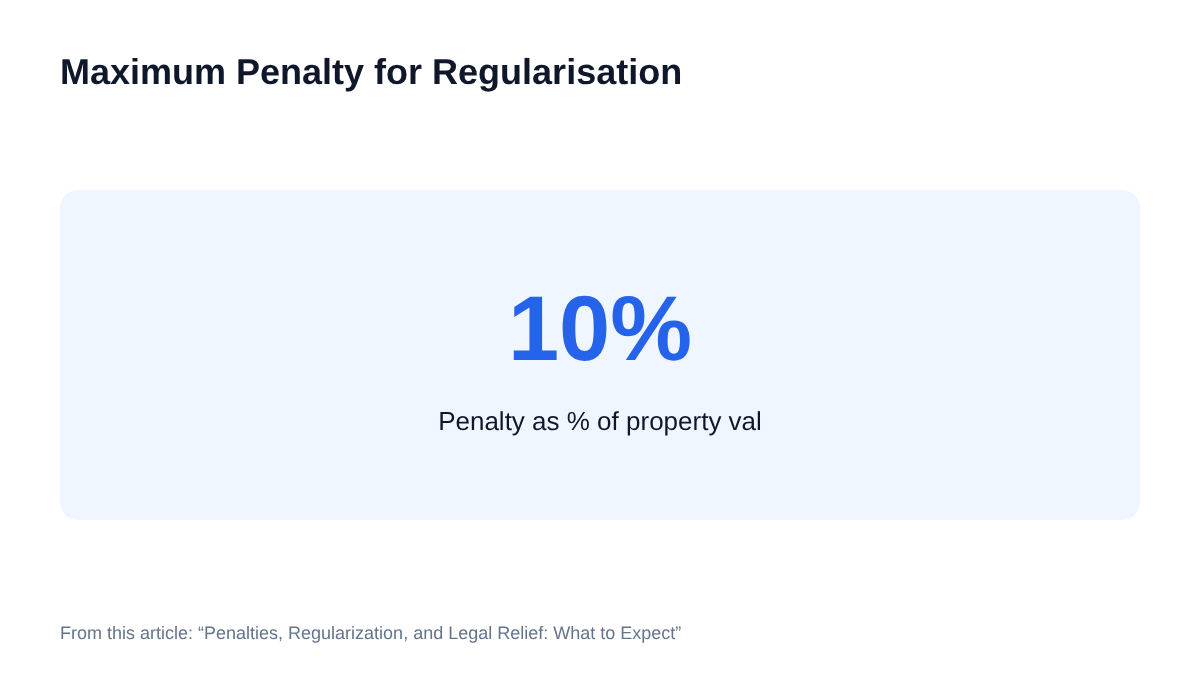
- Monetary Penalty: Regularisation often comes with a hefty fee, sometimes up to 10% of the property value for major violations.
- Delay in Relief: Courts may withhold relief until you regularise or remove the violation.
- Loss of Transfer Rights: You may be barred from selling, gifting, or inheriting the property until compliance is restored.
The process for regularisation usually involves submitting an application, paying the penalty, and bringing the property into full compliance. But not all violations are covered – illegal use of green belts or public land is rarely regularised.
Urban Planning and Its Influence on Disputes
Urban planning in Chandigarh is famously strict. The city was designed by Le Corbusier with clear zones, wide roads, and strict population density limits. The administration updates the master plan every few years, changing what’s allowed in each sector. Punjab and Haryana follow similar processes, but with more variation between towns.
How Urban Planning Changes Affect Ongoing Cases
Sometimes, disputes drag on long enough that the master plan changes mid-case. For example, an area marked as residential may be re-zoned for commercial use, or vice versa. If this happens, courts usually follow the latest plan, not the one in force when the dispute started. This can benefit or harm your case, depending on the new rules.
Urban planning decisions also affect property values, eligibility for regularisation, and the likelihood of getting approvals. If you’re involved in a long-running dispute, keep an eye on master plan updates at the Chandigarh Administration’s Urban Planning page.
Documentation: The Hidden Factor in Bylaw-Related Disputes
You can have the best legal claim in the world, but if you’re missing key documents, your case can stall or fail. This is especially true when local bylaws and zoning rules are involved. Courts and authorities rely on paperwork to check compliance. If you can’t produce the right approvals, plans, or certificates, you’ll be stuck.
For a deeper look at how missing documents derail cases, see this article on the hidden cost of missing documents.
Essential Documents for Compliance
- Latest land use/zoning certificate
- Sanctioned building plans
- Occupancy and completion certificates
- All municipal approval letters
- NOC for property transfer (if required)
- Receipts for regularisation fees or penalties, if applicable
Keep originals and certified copies. If you’re missing any, apply for duplicates from the relevant authority before filing a case.
Frequently Asked Questions
What are Chandigarh property bylaws?
Chandigarh property bylaws are a set of local rules issued by the Chandigarh Administration that govern land use, building construction, and property transfers within the Union Territory. They specify zoning, permitted uses, minimum plot size, building heights, setbacks, and the process for obtaining municipal approvals and NOCs.
How do zoning regulations in Punjab and Haryana differ from Chandigarh?
Zoning regulations in Punjab and Haryana are set by their respective state laws and local development authorities. While the basic principles are similar to Chandigarh – defining residential, commercial, and mixed-use zones – each state has unique rules on plot sizes, density, and regularisation. Always check your local authority’s master plan for specifics.
Why is building code compliance important in property disputes?
Building code compliance ensures that a property is safe, legal, and eligible for transfer or inheritance. Courts and municipal authorities in Chandigarh, Punjab, and Haryana require proof of compliance before granting relief in disputes. Non-compliant buildings may face demolition, penalties, or denial of legal claims.
How can I check if my property in Chandigarh is compliant with bylaws?
To check compliance, you should:
- Obtain the latest zoning and land use certificate from the Estate Office.
- Compare actual construction with sanctioned building plans.
- Verify occupancy and completion certificates.
- Ensure all modifications have written municipal approvals.
If any document is missing or the property deviates from approved plans, approach the municipal authority for clarification or regularisation.
What is an NOC for property transfer, and when is it required?
An NOC (No Objection Certificate) for property transfer is an official document issued by the Estate Office or municipal authority, confirming there are no pending violations or dues on the property. It is required for sale, inheritance, or partition of most government-allocated and leasehold properties in Chandigarh, Punjab, and Haryana.
Can unauthorised constructions be regularised in Chandigarh?
Some unauthorised constructions may be regularised through government schemes, usually by paying a penalty and bringing the property into compliance. However, not all violations qualify – illegal use of public land or green belts is rarely regularised. Check with the Estate Office for current schemes and deadlines.
What happens if a property dispute involves illegal land use?
If a dispute involves illegal land use, such as running a business in a residential zone, courts may deny relief or order the illegal use to stop. Regularisation is possible in some cases, but only if the new use is permitted by current zoning rules and the local authority allows it.
How do I obtain municipal approvals for my property in Punjab or Haryana?
You must apply to the local development authority (GMADA in Punjab, HSVP in Haryana) with all required documents, including sanctioned plans, ownership proof, and fee receipts. The process varies by city but usually involves a technical inspection and payment of processing fees.
Are there penalties for non-compliance with Chandigarh property bylaws?
Yes, penalties can include monetary fines, sealing or demolition of unauthorised structures, and loss of transfer or mutation rights. Penalties depend on the severity and type of violation and may also involve criminal charges for repeated or willful non-compliance.
Can property disputes be resolved if one party is non-compliant with bylaws?
Courts may delay or deny relief until the non-compliant party regularises the property. Sometimes, the only remedy is to remove the violation or pay a penalty before the case proceeds. Compliance is often a precondition for any legal transfer or partition.
Where can I find the latest Chandigarh property bylaws and master plan?
You can access the latest bylaws and master plan on the Chandigarh Administration’s Urban Planning Department website. For Punjab and Haryana, check the official sites of GMADA and HSVP, respectively.
What documents are essential for proving compliance in a property dispute?
Essential documents include the latest zoning certificate, sanctioned building plans, occupancy and completion certificates, all municipal approvals, and the NOC for property transfer if required. Missing documents can delay or derail your case.
What to Do Next: Preparing for a Dispute or Transfer
If you’re facing a property dispute or planning a transfer in Chandigarh, Punjab, or Haryana, your first step should be a compliance audit. Gather all approvals, check the latest rules, and regularise any violations before starting legal action. If you’re unsure, consult a local expert or lawyer familiar with Chandigarh property bylaws and zoning regulations. Skipping this step is the fastest way to lose time, money, and possibly your property rights.